Living poetry in Southern Africa 1
I’ve said ‘Southern Africa’ because, although I’ll concentrate on South Africa, the country I live in now, I anticipate straying into neighbouring countries too, especially Zimbabwe, where I was born and raised. We’ll see where my fancies take me.
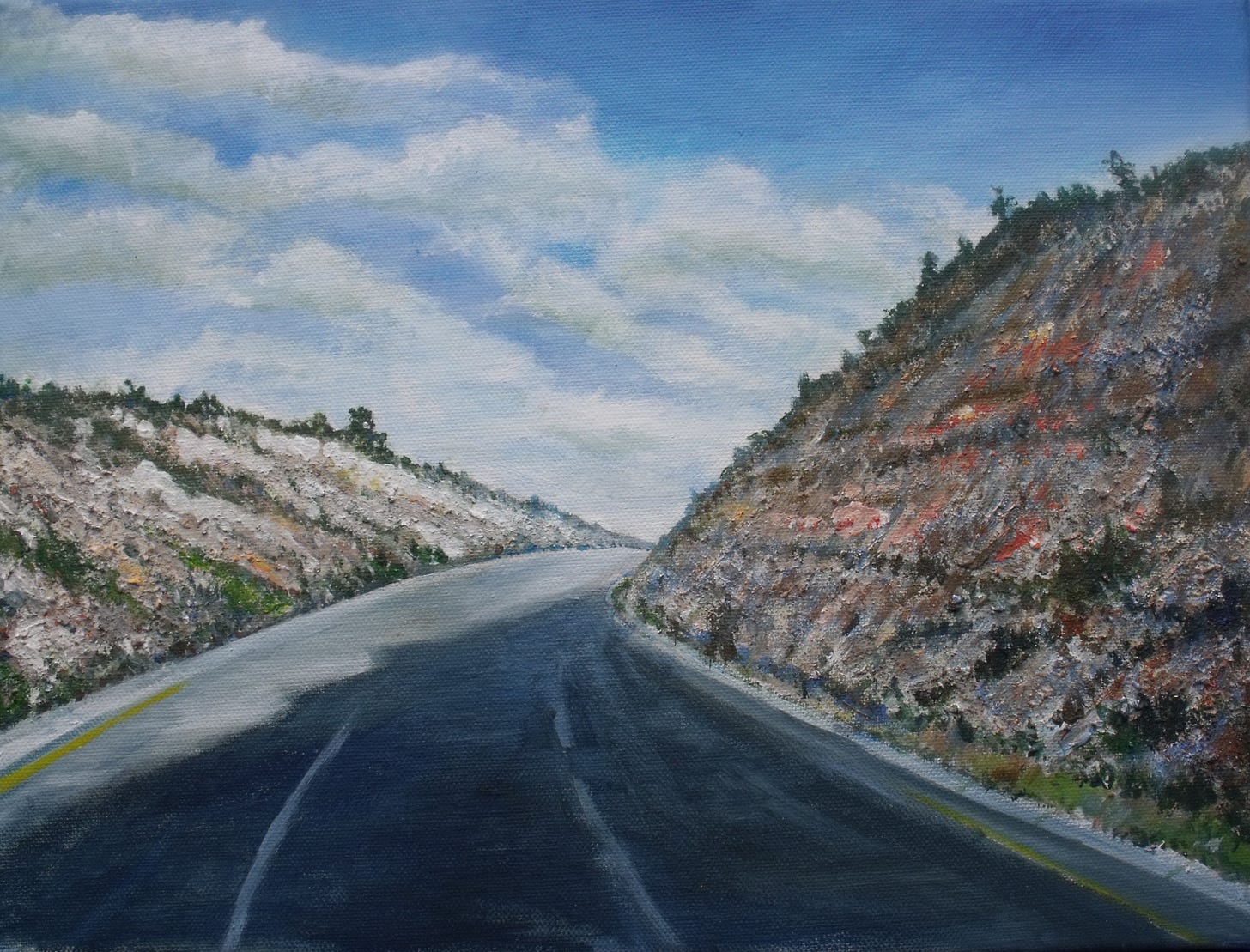
For this first one, though, I want to go right back to the very beginnings of time. And also to begin with where I am. I’ll start whimsically with … road cuttings. I live near a small university town in the Eastern Cape, known successively through history as Graham’s Town, Grahamstown, and most recently Makhanda. Back in the 1980s, for rather dubious political reasons, the government re-directed the N2 highway round the southern fringe of the town, slicing deeply through a number of inconvenient ridges in the process.
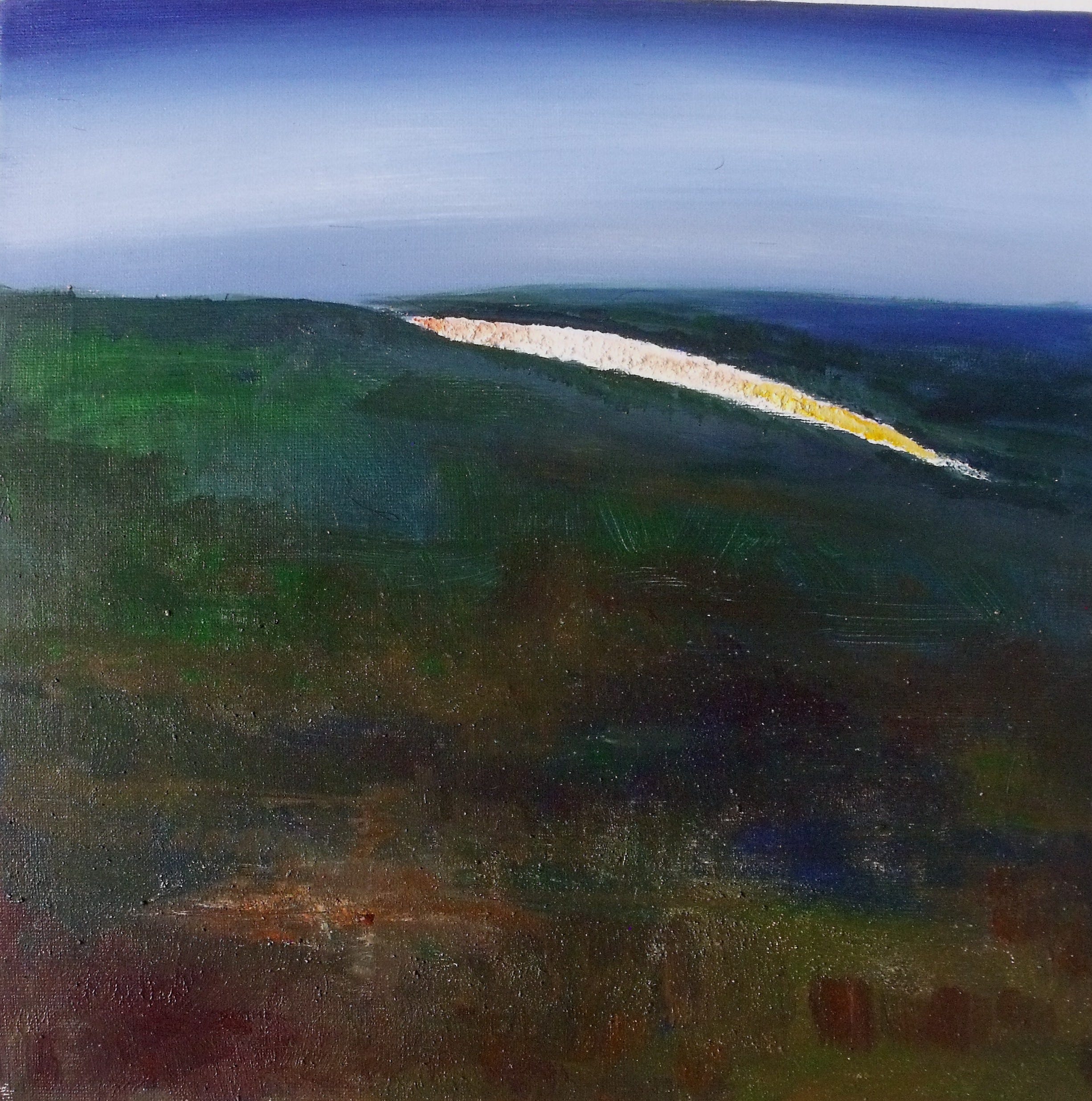
Artistically, I found these cuttings irresistible: chalky curvaceous shapes, aesthetically clean and shapely, but also painfully blade-like wounds in the green landscape. More importantly, the cuttings just incidentally exposed layer upon layer of sedimentary sandstones and shales. This whole region, when it was still part of Gondwanaland and was positioned much closer to the south pole, was once awash under turbulent seas and estuarine backwaters. Over millions of years, the sediments were deposited, compressing, hardening, entombing all manner of the earliest plants and creatures to inhabit the planet. These seafloor sediments were then disrupted by volcanic and tectonic upheavals, in places tilting them into crazed and slidey angles.
You can see this at the Waterloo Farm cutting, which I drive past on my way to town. At this section in particular palaeontologists, notably Dr Rob Gess, have for some years been unearthing – or un-shaling – a most extraordinary range of fossils. Many of them were previously unknown to science; their discovery is revolutionising global understandings of primordial eras, notably the Devonian period, around 400 million years ago. There are scorpions and lampreys, gymnosperms and charaphytes, and lobe-finned all-but-walking fish which, Gess argues, are our very earliest known direct ancestors.
Among the fossils Gess found is a baby coelacanth – a species of armoured fish which to this day, virtually unchanged, still swims at great depths in the Mozambique Channel and off the Comores. So improbably persistent is this fantastic survivor, and so marvellously ugly, that it has attracted mention by a number of poets. Douglas Livingstone (1932-1996) is one. In his poem “Address to a Patrician at Station 8” (from his 1991 collection A Littoral Zone), Livingstone precisely captures “Bwana” Coelacanth’s quirky and “pea-brained” but “regal” air, with its “jointed cranium” and “grim profile of a misanthrope”. As a marine biologist, Livingstone had no qualms acknowledging “Old Four-Legs” – as the coelacanth became fondly known – as one of humanity’s most ancient evolutionary ancestors, or at least “cousin”. So Livingstone’s poem celebrates the intricately entwined genealogies of all life-forms, all deserving the respect we give to family.
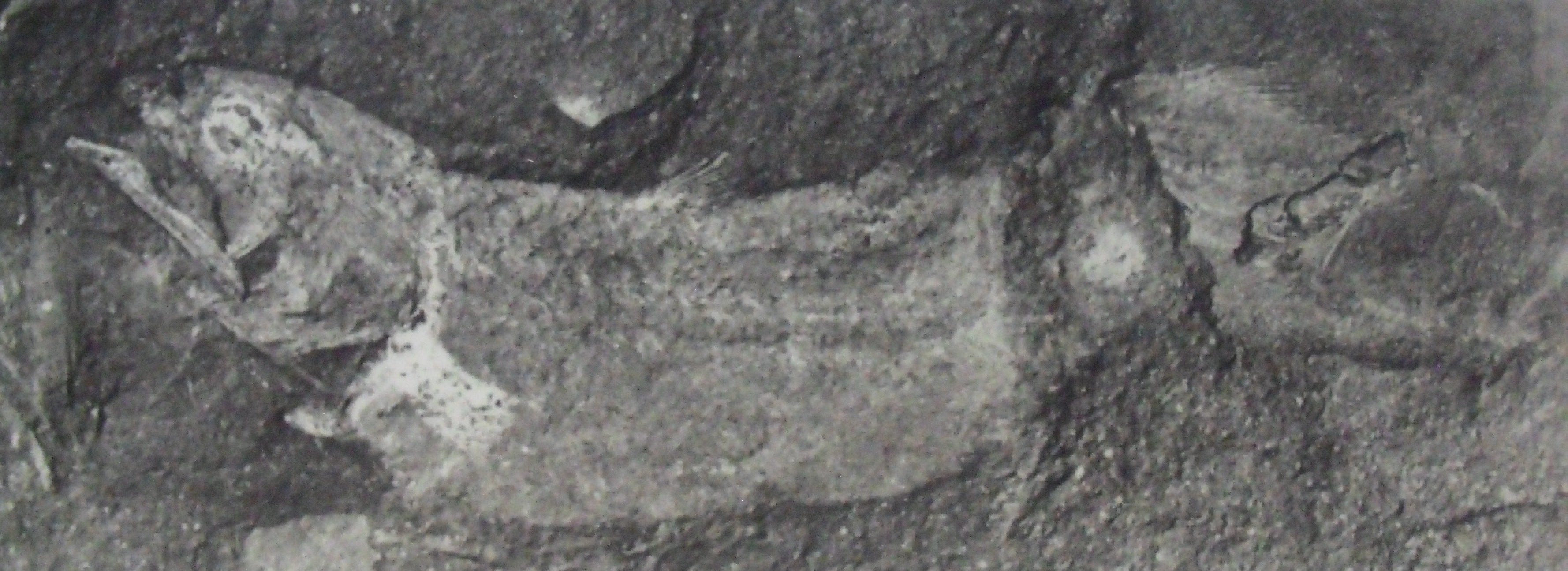
At least two poets resident in Grahamstown responded to the fascination with fossils, even before Gess’s revelations. In “Orthosuchus”, the late Chris Mann describes chiselling out of scrub and rock the bones of a croc-like creature. Its shapes gradually emerge, like the sculpture of Atlas emerging from its matrix of marble, left thus unfinished by Michelangelo. Mann ends the poem:
… I saw it then. A few billion years
since life first stirred on this rock,
you, that impassioned Atlas and I
are still trying to drag our heads
out of a lump of primordial stone.
We may think we’re wonderfully evolved, Mann implies, but we still leave an awful lot to be desired
.
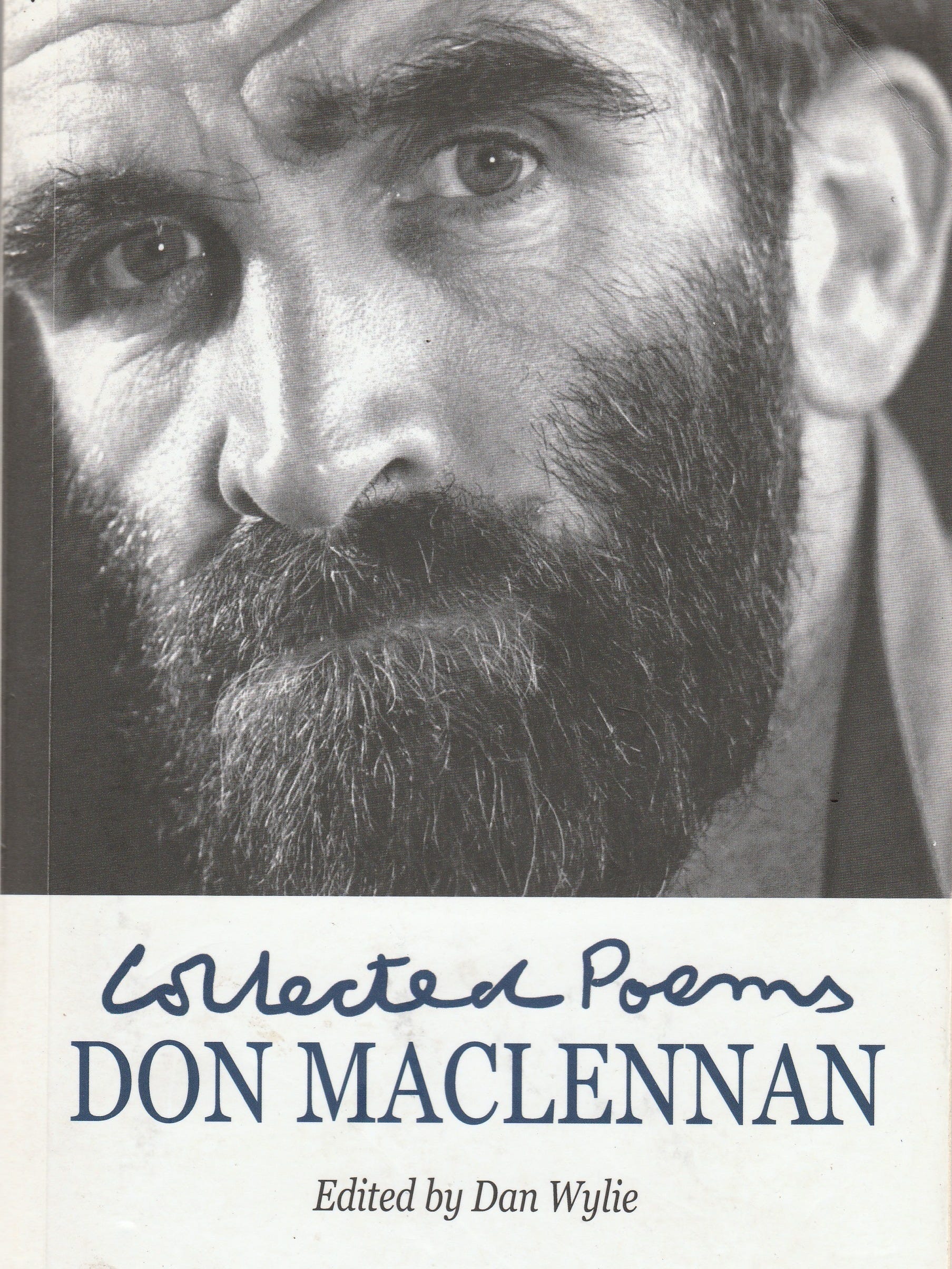
Similar thoughts occurred to Don Maclennan (1929-2009), who then lived diagonally across the street from Chris Mann. Maclennan was one of my undergrad lecturers at the town’s Rhodes University; I later became a lecturer myself in the same department, and Don became a supportive colleague, deep friend, and rock-climbing partner. Embedded, as it were, in his voluminous output of wry and lapidary poetry, are many references to the fossil histories that precede and underpin all our existences.
One poem is titled “Sandstone Pavement”. Maclennan was very conscious that the ground we walk on here “was once/ a seabed,/ had its origin/ in tons of silt/ the gravitation/ of the dead …” That word “gravitation” – much better than mere ‘gravity’ – so weightily conveys the deep process of settling and petrification of fossil remains.
And in a cabinet in Grahamstown’s Albany Natural History Museum, he could connect visually and viscerally with those signs of our primordial past. The following short poem appears in his 2004 collection Excavations:
In the town museuma ten inch slab of seabedon display revealshundreds of small creaturescrushed into each otherin a mass grave,teeth biting into flesh and bone,a deadly carnival turned to stone.
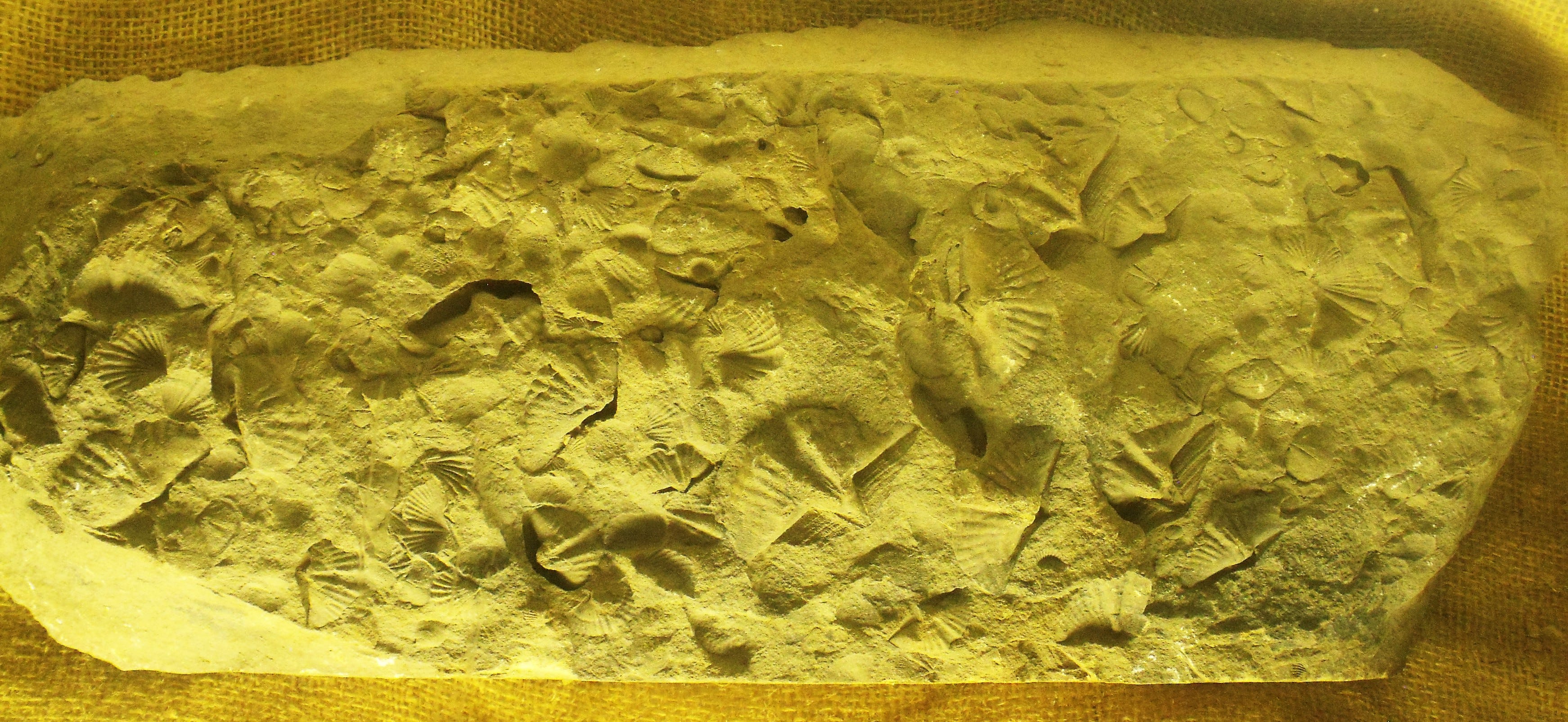
The poem makes no further comment on what this might mean, but it’s clearly a depiction of a Darwinian broil of predation and conflict. Grim stuff, not to be romanticised just because it’s prehistoric. I suspect it had more to do with Maclennan’s state of mind at the time than with the actualities of crustacean relations!
In a rather enigmatic story entitled A Brief History of Madness in the Eastern Cape (2001), Maclennan describes this same slab. He lightly fictionalises his own initial arrival in Grahamstown (which he calls Georgetown).
It was raining the day Mavis and I arrived in Georgetown. So we went to the museum. We whispered along the corridors of exhibits, the dumb past all entombed and labelled. There was one in particular – a piece of Mesozoic fossil beach. … It is a chunk of fossil life, with thousands of different shapes and sizes of crustaceans packed into each other, eating and being eaten, like a Notre Dame gargoyle, foot in mouth, shell overlapping shell, and endlessly impacted palimpsests.
Then there was also a collection of Settler culture – not so tightly packed as the fossil, but clearly in the making. Individual life agonies imprinted on these derelict possessions – spectacles, baby bows, bridal nighties, fading intimate diaries. Each one posed a question for the future.
He’s referring here to the British settlers and military who violently evicted the resident amaXhosa people in the 1820s, for a time under the leadership of Colonel John Graham himself. There’s a related example in the Excavations collection, which in fact centres mostly on the excavation of a typical British frontier fort. There, archaeologists fossick through the nineteenth-century rubbish-tip, finding a parallel palimpsest of “broken bottles, buttons, bullets,/ coins with the head of George V, pottery fragments,/ … clay tobacco pipes, and bits/ of rusted iron.” From this, as with the fossils, the scholars try to “reconstruct a way of life.”
Typically of his vivid but slightly elusive manner – drawing us in but also allowing us to draw our own implications – Maclennan leaves that “question for the future” itself unstated. But it seems fairly clear that he is posing the possibility – probability, really – that our historical bric-a-brac will also become fossils of a sort, another palimpsest for future archaeologists or even palaeontologists – or Martians – to puzzle through.
But beneath that, further dark and existential questions lurk. Are the Settlers (and by extension ourselves in the present) at bottom just another manifestation of that Mesozoic brawl of mutual violence? What makes us modern humans any different from those cannibalistic crustaceans? Are we not also destined for extinction in the unthinkably long unfolding of geological time? If so, why are we here at all? Can our art, our language and our poetry, unique to us though they be, really somehow redeem us?
Don Maclennan had many, profound if always provisional insights about all this, and not all quite so forbidding. But, as do his brief but beautiful, searching and self-deprecating poems, I’ll leave you to grope towards your own conclusions, if you dare.
We have lots more ‘palaeontological poetry’, but that’s enough from this old fossil, for now.
*****

No comments:
Post a Comment